More Than Another "Survivor" Clone
Let's start with what Last War: Survival actually is, because the name is easy to misread. It's a mobile strategy game built around a classic formula: you build a base, train an army, gather resources, join an alliance, and fight for territory. That skeleton is old news in the mobile gaming world. What makes Last War stand out is how it wraps that familiar core in a zombie-apocalypse story with a distinctly cinematic flavor, and then layers on one unexpected twist—a side-scrolling shooter mode that plays nothing like the rest of the game. You're not just a general commanding troops from a map; you're also, at times, an actual shooter picking off zombies with your fingers on a battle screen. That hybrid identity is a big part of why the game has caught so much attention since its release.
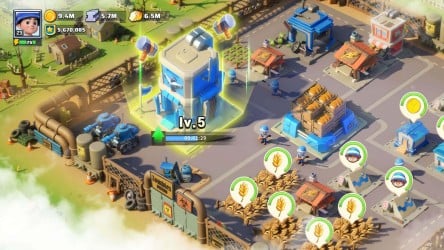
The premise is straightforward enough: a virus has swept the world, turning much of humanity into zombies, and what's left of civilization survives in fortified settlements. You play as the leader of one such settlement, and your job is to keep it alive. That means building and upgrading structures, managing food, wood, iron, and other resources, training and upgrading soldiers, researching technology, and defending your walls when zombie hordes or rival players come knocking. As your settlement grows, you expand into a broader world map where alliances clash over territory and resources. The story is delivered through short, punchy cutscenes and character-driven missions that give the grind a bit of narrative purpose—something many strategy games skip entirely. It's not a deep narrative, but it's more than most competitors bother to include.
Developers and How the Game Got Here
Last War: Survival is developed and published by FirstFun, a mobile gaming studio based in China. FirstFun is a relatively new player compared to some of the industry giants, but it has been building a reputation in the strategy genre with a series of well-performing titles. Last War: Survival is by far its biggest success, and it's a fascinating case study in how a mid-size studio can break through in a crowded market. The game's global launch was a carefully orchestrated roll-out. FirstFun released it in stages across different regions, fine-tuning the game's economy, difficulty curve, and marketing based on early data before pushing it to the world at large. That patient approach paid off spectacularly—Last War climbed the charts in multiple countries, became a top-grossing title in the US, and generated enormous revenue within a year of its full launch.
The game's success hasn't come from a wildly original concept. It's come from execution. FirstFun took a proven genre, polished every detail, invested heavily in performance marketing, and paired the standard strategy loop with that novel shooter element to differentiate it from dozens of lookalikes. The result is a game that feels familiar enough for genre veterans to jump right in, yet fresh enough to stand out in app store listings and grab the attention of players who'd normally skip another build-and-battle title. For anyone watching the mobile market, Last War is a textbook example of how smart positioning and execution can turn a "been there, done that" genre into a chart-topping success.
Core Gameplay Loop: The Strategy That Keeps You Coming Back
Strip away the zombie skin and Last War's core loop is built on the same pillars that define the genre: resource management, building, troop training, and conquest. You start with a small settlement and a handful of buildings. The early game is gentle—tasks guide you through upgrading your Town Hall, constructing resource buildings, and training your first units. The first several days are almost cozy, as you learn the systems at a relaxed pace. But the difficulty and the pressure ramp up steadily. Higher-level buildings take longer and cost more. Better troops require more advanced research. And as you progress, the world map opens up, revealing a living ecosystem of other players' settlements, resource nodes to capture, and zombies roaming the wasteland.
The strategy layer is deep enough to keep dedicated players engaged for months. Alliances are the heart of the social experience; you'll join one, contribute to alliance research, participate in alliance events, and coordinate attacks on shared targets. Territory control on the world map is where the real competition happens, with alliances vying for strategic nodes, buffs, and dominance over regions. There's a steady drip of events, seasonal content, and in-game goals that keep the loop fresh and give players a reason to log in every day. Like most games in this genre, it's designed around daily engagement—there's always something upgrading, something training, something to check on, which is exactly what keeps the session times high and, not coincidentally, drives the game's monetization.
The Shooter Twist: Why It's a B
igger Deal Than It Sounds
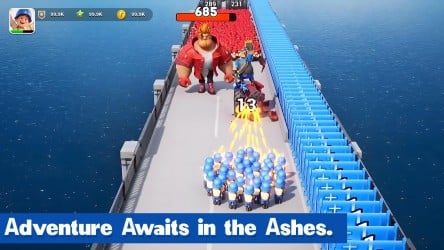
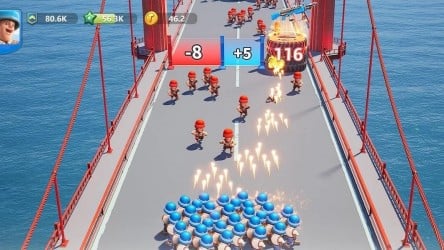
If you read about Last War and only remember one thing, it should be the shooter mode, because it's the feature that genuinely sets the game apart. In the standard strategy loop, combat is largely abstract—you dispatch armies, watch a battle report, and see the outcome as numbers. But Last War periodically drops you into a completely different gameplay mode: a side-scrolling, finger-controlled shooter where your hero character runs and gunned down waves of zombies. You're controlling the character directly, dodging, aiming, and blasting your way through levels. It's a whole different muscle-memory experience from the rest of the game, and it's surprisingly polished for something bolted onto a strategy title.
The genius of this mode is how it hooks players who would never normally stick with a pure strategy game. Someone who finds base-building tedious can still enjoy the action-packed shooting segments. The two modes feed each other too: completing shooter stages earns rewards that help you build up your settlement, and the shooter content unlocks and expands as your city grows. It broadens the game's appeal enormously, pulling in casual action players while keeping the deep strategy audience on board. Industry analysts often point to this shooter layer as a major reason for Last War's breakout success—it gave the game a visual identity, a talking point, and a hook that the sea of similar strategy titles simply lack.
Target Audience: Who Is This Game Actually For?
The clever thing about Last War's design is that it deliberately casts a wide net. At its core, it's a strategy game, so its natural audience is the millions of players who already enjoy mobile strategy titles—people who like long-term progression, base-building, resource management, alliance politics, and territorial conquest. These players are typically patient, willing to invest months into a single game, and comfortable with the slow burn of upgrading and competing. For them, Last War offers a well-executed version of a formula they already love, with a fresh zombie theme and a shooter layer as a bonus.
But the shooter mode pulls in a second, quite different audience: casual action players who might never have touched a strategy game. These players are attracted by the fast, satisfying combat, the zombie-shooting action, and the cinematic presentation. They might not care about optimizing troop compositions or alliance diplomacy, but they'll happily play the shooting levels. The game is also marketed heavily toward what's often called "mid-core" players—people who want more depth than a pure casual game but less commitment than a hardcore PC strategy title. In practical terms, that means Last War's audience spans a broad range: from 20-somethings to 50-somethings, across both genders, in many countries. It's a game designed to be accessible to newcomers while still rewarding the dedicated few, and that broad appeal is a major reason for its commercial success.
Monetization, Player Spending, and the Business Reality
Like nearly every game in this genre, Last War is free to play, and it makes money through in-app purchases. The monetization system centers on the usual mobile strategy pillars: resource packs, speed-up items that shorten build and research timers, and a battle pass that rewards consistent daily play with extra goodies. There are also convenience features and premium currency packages designed to smooth progression. Free players can absolutely progress—the game is built so you can enjoy it without spending anything—but the progression is slower, and the wall between free and paying players becomes more visible as you climb to higher levels and get drawn into the competitive endgame.
The spending reality of these games is important to understand. A small fraction of players, sometimes called "whales," account for a disproportionate share of revenue, spending large sums to stay at the top of their servers' leaderboards. That's the business model that fuels the genre, and Last War is no exception. It's also worth noting the game is designed to encourage spending through daily engagement, events, and competition—the psychological hooks are deliberate. For most players, it's entirely possible to enjoy Last War as a free-to-play experience, but it's equally true that the game's economy gently, and sometimes not-so-gently, encourages purchases. As with any free-to-play game, the healthy approach is to decide your own spending limit up front and stick to it.
Cross-Platform Play, Community, and Where the Game Goes Next
One of the most appealing practical features of Last War is that it's cross-platform between mobile devices and PC. You can play on your phone during your commute and pick up the same account on your desktop when you're home. That flexibility matters a lot to the dedicated strategy audience, who often want to leave the game running or manage large-scale alliance operations more com
fortably on a bigger screen. It also means your progress and purchases follow you across devices, which reduces the friction of switching platforms.
The game's community is active and vocal, centered around alliances that function almost like small communities or guilds, with their own chat, coordination, and culture. These alliances are where the game's social and competitive heart lives; the strongest players and biggest spenders often lead them, and membership is a core part of the long-term experience. Last War's success has also positioned it to grow further. The studio continues to release seasonal content, new events, and balance updates, and the game shows no signs of slowing. For a genre that's crowded with competition, Last War has carved out a durable position—proof that a familiar formula, executed with polish and a clever hook, can still dominate the mobile charts and keep millions of players logging in daily.