Advertisement
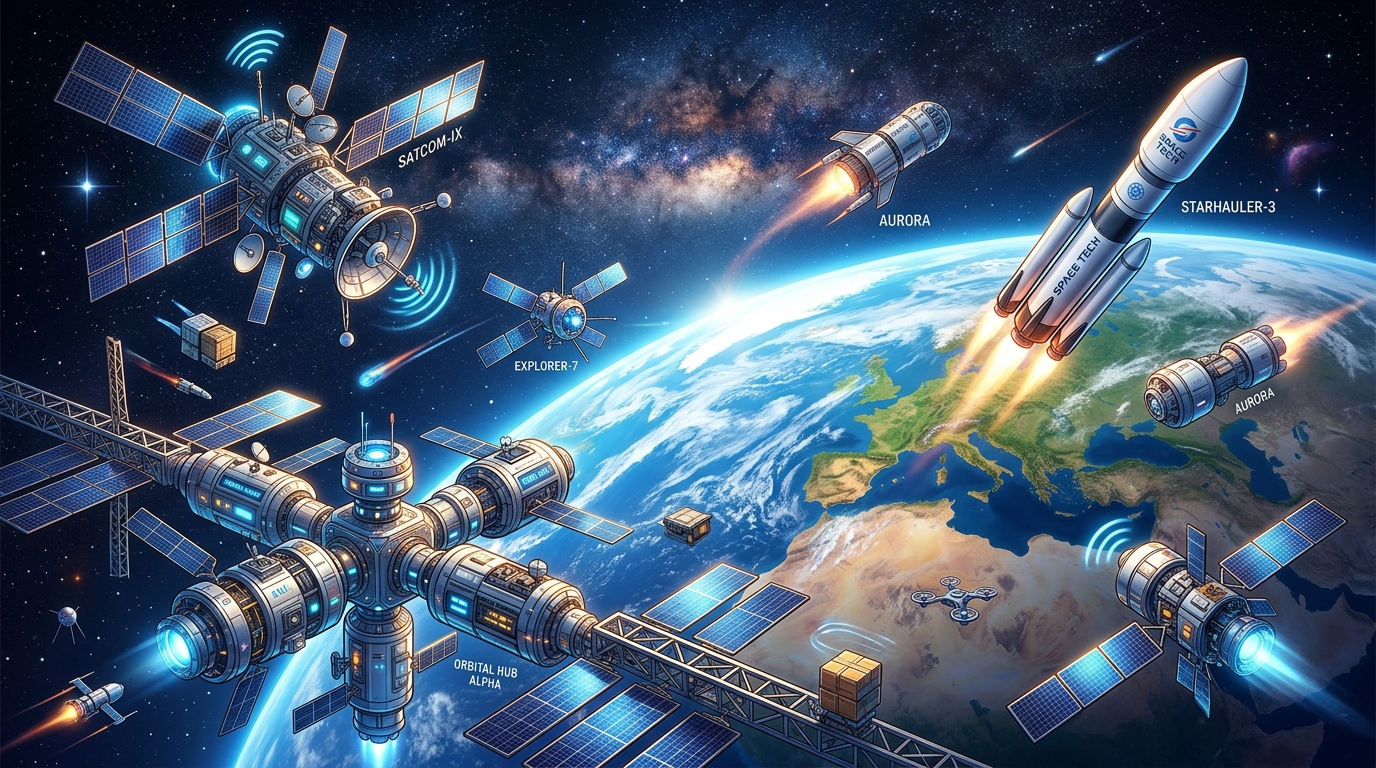
Space technology has significantly evolved since the inception of the space race in the mid-20th century. The initial strides were marked by the Soviet Union's launch of Sputnik, the world's first artificial satellite, in 1957. This monumental event triggered the space race, leading to the United States' historic moon landing in 1969. These early milestones laid the foundation for unprecedented technological breakthroughs in the ensuing decades.
As we moved into the late 20th century, satellite technology developed rapidly, revolutionizing communications and global positioning systems. The Hubble Space Telescope, launched in 1990, expanded our understanding of the universe, providing stunning images and data that transformed scientific insights into cosmology. These historical events not only advanced technology but also enriched scientific understanding, setting a precedent for future exploration.
Today's space technology landscape is characterized by remarkable innovations that promise to redefine exploration and utilization of space. Companies like SpaceX are at the forefront, with their development of reusable rockets significantly reducing the cost of space missions. The SpaceX Falcon 9, for instance, represents a leap in efficiency, enabling multiple launches with the same hardware.
Satellite technology continues to advance, with satellite internet initiatives like Starlink aiming to provide global high-speed internet access. Moreover, AI and robotics are becoming integral to space missions, exemplified by the Mars rovers' ability to autonomously navigate and conduct experiments on the Martian surface.
These cutting-edge technologies not only enhance our capabilities in space exploration but also have profound potential applications on Earth, revolutionizing industries from telecommunications to logistics.
Despite these advancements, space technology faces significant challenges. The cost of launching and maintaining space missions remains a formidable barrier, requiring substantial funding and international collaboration. Technical and engineering hurdles, such as developing life-support systems for long-duration missions, also persist.
Moreover, space debris poses a growing threat to operational satellites and future missions, necessitating cooperative international efforts to address the issue. Regulatory and ethical concerns, including space mining and property rights, further complicate the landscape, highlighting the need for a balanced and coordinated approach to the advancement of space technology.
Looking ahead, the future of space exploration holds both exciting possibilities and daunting challenges. The potential for human colonization of planets like Mars is a topic of intense research and speculation. Initiatives for space tourism are gaining traction, with companies aiming to make space travel accessible to civilians.
Long-term sustainability of space missions is critical, as it will determine the feasibility of prolonged human presence in space. Ensuring that these explorations contribute positively to both scientific understanding and technological advancement while maintaining ethical considerations will be vital for the future.
Space technology's influence extends beyond exploration, impacting everyday life in numerous ways. Satellite communications have become the backbone of global connectivity, facilitating everything from internet access to live broadcasts. Accurate weather forecasting, enabled by advanced satellites, helps in disaster preparedness and response.
Earth observation and environmental monitoring through satellite imagery provide critical data for climate research and agricultural planning, demonstrating the practical benefits of space technology in addressing global challenges.
In conclusion, space technology is not just about exploring the cosmos, but also about improving life on Earth, illustrating its transformative potential in shaping our future.